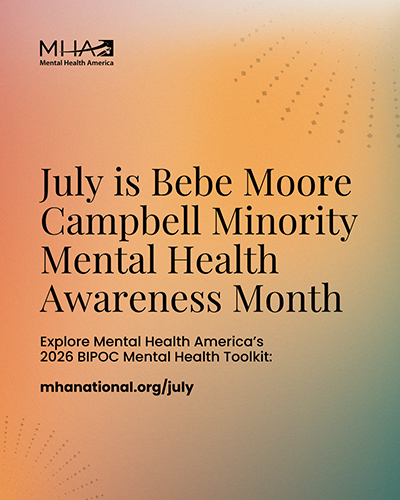
Each July, we at the Vashti Center for Children and Families are proud to recognize Bebe Moore Campbell National Minority Mental Health Awareness Month, also referred to as BIPOC Mental Health Month. This observance honors the legacy of teacher, author, journalist, and mental health advocate Bebe Moore Campbell, whose work helped bring national attention to the mental health needs of Black, Indigenous, and People of Color (BIPOC) communities. Throughout the month, we reaffirm our commitment to raising awareness, reducing stigma, and promoting equitable access to quality mental health care for every child and family we serve.
In May 2008, the U.S. House of Representatives officially designated July as Bebe Moore Campbell National Minority Mental Health Awareness Month. Later that year, Mental Health America (MHA) and the National Alliance on Mental Illness (NAMI) established BIPOC Mental Health Month to shine a light on the unique mental health experiences of communities of color. Led by Bebe Moore Campbell, this national effort sought to address stigma, improve access to care, and close longstanding gaps in
mental health services.
The goals of this observance remain just as important today. BIPOC Mental Health Month encourages us to break the stigma surrounding mental illness by challenging cultural misconceptions and addressing the shame that sometimes prevents individuals from seeking help. It also calls attention to the need for equitable access to mental health care by confronting barriers such as cost, lack of insurance coverage, provider shortages, and systemic inequities that disproportionately affect many minority communities.
The 2026 Theme: More Good Days, Together
The 2026 Mental Health America campaign theme, More Good Days, Together, reminds us that healing and hope are strengthened through connection. Rather than focusing solely on the challenges people face, this year’s campaign encourages us to recognize moments of joy, resilience, and support—even during difficult seasons. It emphasizes the importance of building meaningful relationships, strengthening communities, and creating trusted spaces where individuals feel safe discussing their
mental health.
A major focus of this year’s campaign is culturally responsive care. Mental Health America highlights the importance of increasing access to mental health providers who understand and respect the cultural backgrounds, values, and lived experiences of those they serve. Expanding culturally informed care can help reduce longstanding disparities, increase trust in mental health systems, and ensure that individuals receive care that is compassionate, respectful, and effective.
Why This Month Matters
Mental health affects everyone, yet not everyone has equal access to support. Historical discrimination, language barriers, financial limitations, underrepresentation among mental health professionals, and past experiences with health care systems have all contributed to disparities in mental health treatment for many communities of color. As a result, individuals may delay seeking care, struggle to find providers who understand their cultural experiences, or avoid treatment altogether because of stigma or distrust.
At the Vashti Center, we believe every person deserves to feel seen, heard, and supported. Through our work with children, youth, families, and communities across Southwest Georgia, we strive to foster healing, hope, and resilience while encouraging conversations that normalize mental health and connect individuals with the resources they need.
Helpful Resources
Mental Health America has created a free bilingual (English and Spanish) BIPOC Mental Health Month Toolkit designed to help individuals, families, educators, organizations, and communities start meaningful conversations about mental health. The toolkit includes communication resources, printable materials, and activities centered around finding moments of good amidst life’s challenges while cultivating conversations within trusted spaces.
Mental Health America also offers a comprehensive Resource Center, which includes educational articles, local affiliate directories, and scientifically validated, anonymous mental health screenings to help individuals better understand their emotional wellbeing. Whether someone is looking for information, local support, or simply a place to begin, these free resources can provide valuable guidance.
Additional culturally specific organizations and support services include:
● BlackLine – A BIPOC-vetted peer support line specializing in crisis counseling, peer support, and social justice advocacy. Call 1-800-604-5841.
● Naseeha Mental Health – A confidential, 24/7 global support lifeline providing culturally responsive support for Muslim youth and adults. Call 1-866-627-3342.
● StrongHearts Native Helpline – A confidential, culturally grounded helpline serving Native American and Alaska Native individuals experiencing domestic violence or seeking emotional support. Call or text 1-844-7NATIVE.
● Therapy for Black Girls – An online community dedicated to making mental health conversations more accessible while helping Black women connect with culturally competent mental health providers.
If you or someone you know is experiencing a mental health crisis, support is always available:
● 988 Suicide & Crisis Lifeline – Call or text 988 anytime to connect with a trained crisis counselor.
● Crisis Text Line – Text COALITION to 741741 to connect with a live, trained crisis counselor.
● Línea Nacional de Prevención del Suicidio (Spanish) – 1-888-628-9454.
Learn More
To explore Mental Health America’s bilingual BIPOC Mental Health Month Toolkit and campaign materials, visit:
https://mhanational.org/bipoc-mental-health/bipoc-mental-health-month/
To access Mental Health America’s Resource Center and free anonymous mental health screenings, visit: https://mhanational.org/
To find culturally responsive resources for communities of color, including Therapy for Black Girls, visit: https://www.mmhla.org/resources-for-people-of-color
For additional BIPOC mental health resources and educational materials, visit: https://www.thementalhealthcoalition.org/category/bipoc/
Moving Forward Together
Bebe Moore Campbell National Minority Mental Health Awareness Month is more than a calendar observance—it is a reminder that everyone deserves access to compassionate, respectful, and culturally responsive mental health care. It is an opportunity to listen, learn, advocate, and support one another while continuing to break down barriers that prevent individuals from seeking help.
At the Vashti Center for Children and Families, we remain committed to promoting healing, hope, and resilience within the communities we serve. By working together, encouraging open conversations, expanding access to care, and supporting one another with compassion, we can help create more good days—together for individuals, families, and communities across Southwest Georgia.